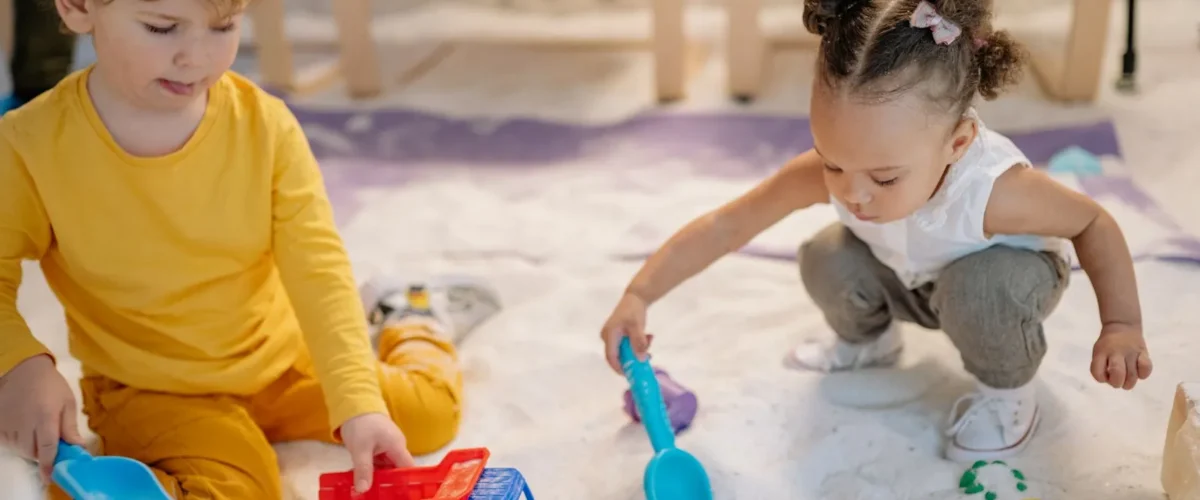
Indoor activities for young children can be both fun and educational, providing opportunities to keep them engaged while you’re inside. Here are some ideas tailored for different age groups within your family, from 1-year-olds to 10-year-olds.
Activities for Toddlers (1-3 years old)
Toddlers need activities that are safe and easy to supervise. These activities promote exploration and learning while keeping them busy indoors.
- Balloon Pop Game: Inflate a few balloons and use a small toy or spoon to pop them without breaking them. This activity encourages fine motor skills and hand-eye coordination in toddlers.
- Shape Sorting: Use simple shape sorters with large holes for younger toddlers, or provide shapes cut from paper or cardboard that can be sorted into different containers based on their design. It’s a great way to teach basic geometry and color recognition.
- Storytime: Read books together. Choose colorful board books with interactive elements like pull-tabs or flaps for young children who are just starting to appreciate the storybook format. This enhances language skills and imagination.
Activities for Preschoolers (4-5 years old)
Preschool-aged children can engage in activities that require a bit more planning and coordination, but still need supervision due to their age and curiosity levels.
- Magnet Fishing: Use a magnet attached to the end of a string or a stick. Have your child “fish” for metal objects hidden around the house like paper clips, thumbtacks, or coins. This activity is both fun and educational as it teaches about magnetism.
- Water Play: Fill a large bowl with water and add toys that float or sink to play with. Use soap bubbles for extra enjoyment and learning about cause and effect when they burst. Ensure the area is cleanable, but this activity can be very entertaining.
- Role Play Centers: Set up different stations like a doctor’s office, grocery store, or salon where your child can act out scenarios with toys or dress-up clothes. This encourages social skills and creativity in a safe environment.
Activities for Early Elementary Schoolers (6-7 years old)
As children grow older, their activities should challenge them more while still being accessible at home.
- Crafts with Recycled Materials: Use cardboard tubes, old magazines, and other recyclable items to create pictures or models. It’s a budget-friendly way to encourage creativity and recycling awareness.
- Science Experiments at Home: Simple experiments like making a volcano or creating slime can be both fun and educational, teaching children about chemistry and physics in a hands-on manner without needing expensive equipment.
- Reading Clubs with Friends: If your child has friends over, organize an indoor reading session. Take turns choosing books to read aloud and discuss the stories together. This can be a bonding experience as well as an educational one.
Activities for Older Elementary Schoolers (8-10 years old)
For older children, activities that promote critical thinking and teamwork are ideal.
- Board Games and Puzzles: Choose games or puzzles with varying levels of difficulty. This helps develop cognitive skills like problem-solving and strategic thinking while also encouraging patience and cooperation during playtime.
- Building Projects: Build structures using building blocks, LEGO, or even construction paper. These activities not only foster creativity but also teach spatial awareness and fine motor skills as they put pieces together accurately.
- DIY Science Experiments: More advanced experiments can be done with household items to explore scientific concepts. Always ensure safety first; wear goggles if necessary, and supervise closely. These experiments can be very rewarding when the results are visible and exciting!
How We Chose
The activities listed here were chosen based on their ability to provide fun and educational experiences for children of different ages within your family. Each activity is designed to support cognitive, physical, social-emotional development, or creativity while ensuring safety as a priority.
Frequently Asked Questions (FAQ)
- Q: How can I keep my 1-year-old occupied without spending too much money?
- Q: Are there activities that help my 10-year-old develop leadership skills?
- Q: Can I use these ideas with multiple children of different ages?
A: For young infants and toddlers, simple activities like wrapping them in blankets to “swim” or using a mirror for visual exploration can be budget-friendly while stimulating their senses. Books with large pictures are also great starting points.
A: Leadership development is crucial at this age. Organize team-building exercises or let them lead a small group activity, such as planning and hosting a themed party for younger siblings or friends. This helps in building confidence and organizational abilities.
A: Absolutely! Most activities can be adapted to fit the age range by adjusting the difficulty level, providing appropriate materials, or setting up different stations for each child based on their interests and developmental stage.
Affiliate Disclosure: KidlyPicks.com may earn commissions from qualifying purchases through affiliate links in this article, at no extra cost to you. All opinions are independently formed.
Before you buy: check live CPSC recalls for baby and kids gear on KidlyPicks Recall Watch (RSS) — updated weekly.