Rectal Vs Forehead Thermometer Accuracy
Comparing rectal vs forehead thermometer accuracy? Here’s an honest head-to-head. When choosing between a rectal and a forehead thermometer for your child’s temperature reading, accuracy is paramount. Rectal thermometers are often considered the gold standard for infants due to their precision and quick results. Forehead thermometers, on the other hand, offer convenience and non-invasive readings suitable for older children and adults. Both types have their merits, but parents should consider the specific needs of their child when making a choice.
What Rectal vs Forehead Thermometer Accuracy Actually Compares
When choosing between a rectal and a forehead (or temporal artery) thermometer, parents often wonder which is more accurate for measuring their child’s temperature. Both types of thermometers have distinct advantages depending on the situation.
Rectal thermometers are considered highly accurate because they measure body temperature close to where it’s regulated—the brain—and provide results that closely match oral or axillary (underarm) readings in adults and older children. They are particularly useful for infants under six months, as their rectal temperatures most reliably indicate fever.
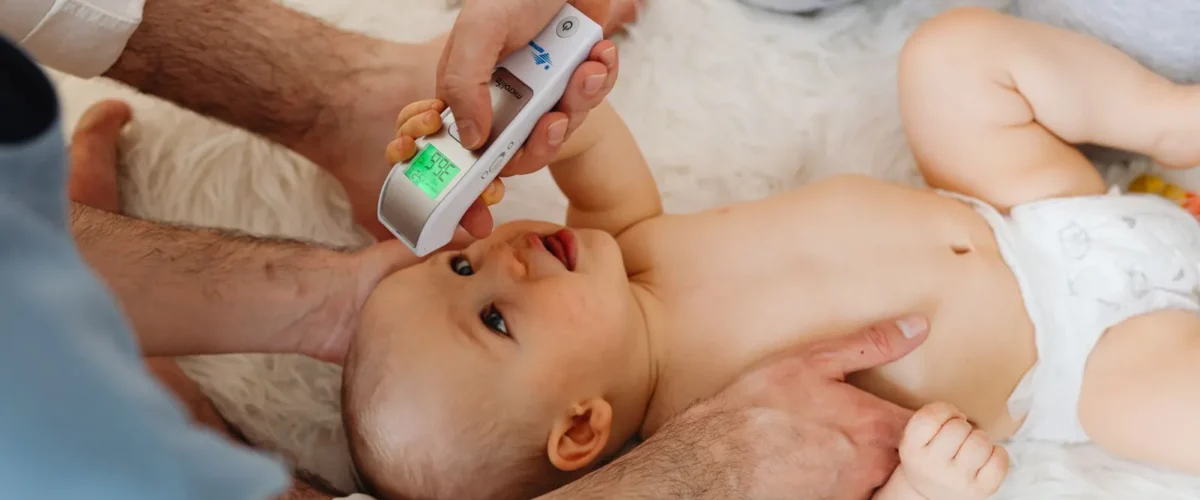
Forehead (or temporal artery) thermometers use infrared technology to measure the temperature of blood vessels near the surface of the forehead. These devices offer a quick, non-invasive method without causing discomfort or risk of injury compared to rectal thermometers. They are especially useful for older children and adults who may resist having their temperature taken via other methods.
Accuracy can vary based on how each thermometer is used. Rectal readings require proper insertion depth and technique to ensure accuracy, while forehead thermometers need to be held firmly against the skin and aligned correctly with the temporal artery. Both types should come from reputable manufacturers and follow established safety guidelines.
Ultimately, the choice between a rectal and a forehead thermometer depends on your child’s age, comfort level, and your preference for speed versus precision in temperature measurement.
Head-to-head: The Key Differences
When choosing between a rectal thermometer and a forehead (temporal artery) thermometer for measuring your child’s temperature, it’s important to understand their unique characteristics and accuracy levels.
Rectal Thermometer Accuracy:
Rectal thermometers are often considered the gold standard for infants under three months due to their precision. They measure body temperature directly from the rectum, which is close to core body temperature. Rectal readings can provide a more accurate baseline compared to other methods in this age group because young babies may not have fully developed sweat glands and can’t regulate their body heat as effectively.
Forehead Thermometer Accuracy:
Forehead thermometers use infrared technology to measure the temperature of blood vessels near the surface of the skin on the forehead. They are non-invasive, quick, and easy to use for all ages, including infants. However, their accuracy can be influenced by factors such as ambient room temperature, sweat on the forehead, or hair covering the measurement area.
Key Differences:
– Ease of Use: Forehead thermometers are generally easier to use and less intrusive than rectal thermometers.
– Speed: Forehead thermometers provide results almost instantly, while rectal readings take a few seconds longer but offer more precise measurements for very young infants.
– Comfort: Rectal thermometers can be uncomfortable or distressing for both the child and parent. In contrast, forehead thermometers are non-invasive and cause minimal discomfort.
Conclusion:
For newborns and infants under three months where accuracy is paramount, a rectal thermometer may offer more reliable readings. For older children and situations requiring quick temperature checks without causing distress, a forehead thermometer is often the better choice. Parents should consider their child’s age, comfort level, and the specific needs of each situation when choosing between these two types of thermometers.
Which One Should You Choose
When deciding between a rectal and a forehead thermometer for your child, it’s important to consider both accuracy and ease of use. Rectal thermometers are often considered the gold standard for infants under 3 months due to their precision in measuring core body temperature. They provide accurate readings quickly but require careful handling to avoid discomfort or injury.
Forehead thermometers, on the other hand, offer a non-invasive method that is generally more comfortable and quicker to use, especially with older babies and toddlers who may resist having a rectal thermometer used. These devices measure infrared radiation emitted from the forehead, providing results in just seconds without causing distress.
For infants under 3 months, opt for a high-quality rectal thermometer if you are confident in its proper use. Look for models that have a soft tip and flexible design to minimize discomfort. For older children or situations where quick readings are crucial, a reliable infrared (forehead) thermometer is preferable. Ensure the forehead thermometer you choose has good reviews regarding accuracy and ease of use.
Ultimately, the best choice depends on your child’s age, comfort level, and your personal preference for measurement methods. Both types have their advantages; consider what works best for your family’s needs.
Pros and Cons of Each
When choosing between a rectal and a forehead thermometer for measuring your child’s temperature, it’s important to consider both the accuracy and ease of use.
Rectal Thermometer
Pros:
– Accuracy: Rectal thermometers are generally considered more accurate for infants under 3 months old. They provide a closer reading to core body temperature.
– Speed: Rectal thermometers can give quick readings, often in just a few seconds, which is crucial when dealing with an infant who may not be cooperative.
Cons:
– Ease of Use: Inserting a rectal thermometer requires careful positioning and can cause discomfort or distress for the child. It also poses a risk if not used correctly.
– Risk of Injury: Improper use can lead to injury, such as rectal bleeding or perforation.
– Hygiene Concerns: Rectal thermometers need thorough cleaning after each use to prevent infection.
Forehead Thermometer
Pros:
– Ease of Use: Forehead thermometers are non-invasive and easy to use. They can be placed on the forehead without causing discomfort, making them ideal for older infants and toddlers.
– Safety: There is no risk of injury associated with using a forehead thermometer.
– Convenience: These devices often provide quick readings and can be used multiple times throughout the day without needing to clean between uses.
Cons:
– Accuracy: While forehead thermometers are generally accurate, they may not always give as precise results as rectal thermometers, especially for very young infants. The reading depends on how well the thermometer is positioned.
– Variability: Factors such as sweating or environmental temperature can affect readings, leading to potential inaccuracies.
When selecting a thermometer, consider your child’s age and comfort level with each method. For newborns, rectal thermometers might be more accurate but require careful handling. For older infants and toddlers, forehead thermometers offer a safer and less stressful option despite their slight variability in accuracy.
Frequently Asked Questions
Q: Which is more accurate for measuring body temperature, a rectal or forehead thermometer?
A: Rectal thermometers are generally considered to be more accurate for taking core body temperature readings in infants and young children compared to forehead (or temporal artery) thermometers.
Q: Can I use a rectal thermometer on an older child or adult instead of a forehead thermometer?
A: While rectal thermometers provide highly accurate readings, especially for younger children, they are not typically recommended for older children or adults. Forehead thermometers are safer and more convenient for these age groups.
Q: How do I ensure the accuracy of my forehead thermometer when taking temperature readings?
A: To get an accurate reading from a forehead thermometer, make sure to follow the manufacturer’s instructions carefully, including positioning it correctly on the temporal artery area and ensuring no hair or sweat interferes with the measurement.
Q: Are there specific situations where using a rectal thermometer over a forehead one is necessary for infants?
A: For infants under 3 months old showing signs of illness, healthcare providers often recommend rectal thermometers due to their accuracy in detecting fever. However, always consult your pediatrician or healthcare provider for guidance tailored to your child’s needs.
Understanding Temperature Measurement Variability
When considering rectal versus forehead thermometers for your child’s health monitoring, it’s important to understand that temperature readings can vary based on several factors beyond just the measurement method. Environmental conditions such as room temperature and humidity can affect body heat distribution, leading to slight variations in readings between different types of thermometers. Additionally, the time of day and recent physical activity can also influence a child’s core body temperature. For instance, after playing vigorously or taking a bath, your child’s forehead may feel warmer due to increased blood flow near the skin surface.
Moreover, the accuracy of both rectal and forehead thermometers depends on how they are used. Rectal thermometers require proper insertion depth and should be left in place for an adequate amount of time to ensure accurate readings. Similarly, forehead thermometers need to be positioned correctly and held steady against the temporal artery to provide reliable results.
Given these variables, it is crucial to take multiple temperature measurements at different times or use a combination of both methods to get a more comprehensive understanding of your child’s health status. This approach can help you make informed decisions about when to seek medical advice based on consistent trends in body temperature rather than relying solely on one reading.